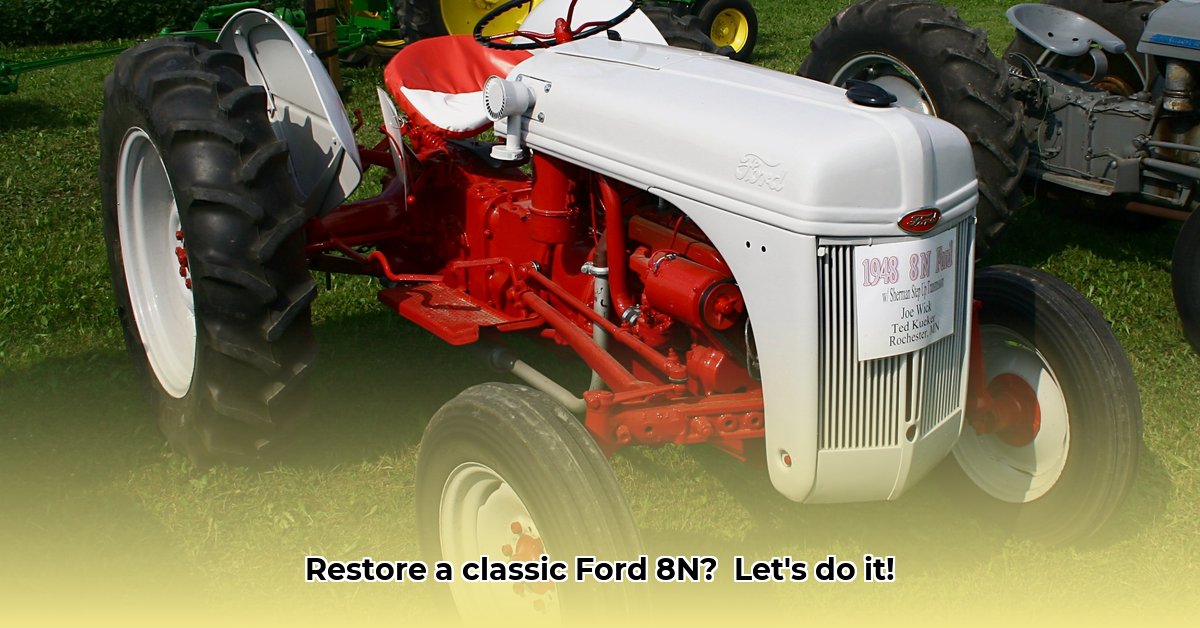
A Legacy Forged in Steel: The Ford 8N's Impact on Agriculture
The 1949 Ford 8N tractor—a name synonymous with post-war agricultural innovation and enduring reliability. This iconic machine revolutionized farming, making mechanized agriculture accessible to a wider range of farmers, particularly smaller operations, thanks to its relatively affordable price and robust design. This article explores the 8N's history, technical specifications, maintenance procedures, and the rewarding process of restoration. Whether you're a seasoned mechanic, a history enthusiast, or a budding restorer, this guide provides insights and practical advice. For more detailed horsepower information, see this helpful resource.
Historical Context: The 8N's Rise to Prominence
Emerging from the post-World War II era, the Ford 8N capitalized on the burgeoning demand for efficient agricultural machinery. Its relatively low cost compared to competitors made it attainable for many family farms, significantly impacting agricultural production and efficiency across the United States. The 8N's straightforward design, emphasizing simplicity and reliability, further cemented its popularity. Did you know that the 8N's design directly influenced the development of subsequent Ford tractor models, further solidifying its legacy? This iconic machine democratized farming by bringing reliable power to a previously underserved farm community.
Technical Specifications and Performance: Under the Hood
The 1949 Ford 8N's beating heart is a 2.0-liter, four-cylinder, L-head (side-valve) engine. This design, prioritizing durability and straightforward maintenance over maximum horsepower, delivered a claimed output of up to 27 horsepower. However, real-world drawbar (pulling power) measurements typically fall closer to 20 horsepower. This discrepancy stems from variations in testing methodology and the type of fuel used (gasoline vs. distillate).
The transmission system is a point of some continued debate. While predominantly a four-speed gearbox, the existence of a less common 12-speed option remains a topic of discussion among enthusiasts. The braking system relied on simple, but effective, manual drum brakes, while the steering was a purely mechanical system requiring some physical effort. This system, while less refined than modern power steering, provided operators with a very direct connection to the machine.
| Specification | Description | Notes |
|---|---|---|
| Engine | 2.0L, 4-cylinder, L-head (side-valve) | Simple, reliable design prioritizing ease of maintenance. |
| Power Output | Up to 27 HP (claimed); ~20 HP at drawbar (tested) | Discrepancies result from testing method differences and fuel types. |
| Transmission | Primarily 4-speed; 12-speed option reported, but less common | Further research may clarify the prevalence of the 12-speed variant. |
| Braking System | Manual drum brakes | Effective for its era. |
| Steering | Mechanical | Direct, hands-on feel. |
Maintenance and Repair: Keeping Your 8N Running Strong
Regular maintenance is paramount for preserving your 8N's longevity and performance. Preventative care is key; addressing minor issues promptly prevents larger problems down the line. Focus on routine tasks such as oil changes, lubrication of moving parts, and thorough inspections for leaks, loose connections, and signs of wear and tear.
Common issues include worn-out clutches, failing brakes, and occasional electrical problems. Fortunately, parts sourcing is relatively straightforward, with dedicated suppliers, online communities, and classic tractor shows providing various avenues for acquiring necessary components. Many repairs – such as carburetor adjustments and basic electrical troubleshooting – are achievable for mechanically inclined owners. More complex repairs should be entrusted to a qualified mechanic experienced with vintage tractors. Wouldn't you agree that investing time in maintenance translates to extending the life of this historically significant machine?
Restoration Guide: Bringing Your 8N Back to Life
Restoring a Ford 8N is a rewarding endeavor that combines meticulous craftsmanship with historical appreciation. This process requires patience, skill, and resourcefulness. It’s a project that demands attention to detail and often requires balancing preservation of originality with ensuring functionality.
Step-by-Step Restoration:
- Disassembly: Methodically disassemble the tractor, meticulously documenting each step with photographs.
- Cleaning: Thoroughly clean each component, removing rust, dirt, and grime.
- Assessment and Repair/Replacement: Assess the condition of each part; repair if possible, replace when necessary.
- Reassembly: Carefully reassemble, referring to your documentation.
- Testing and Refinement: Thoroughly test the restored tractor and fine-tune as needed.
Sourcing parts may require some detective work. Online forums dedicated to classic tractors, specialized suppliers, and classic tractor shows are valuable resources. Balancing the use of original parts with high-quality reproductions is often necessary. The challenges of restoration are numerous, but the satisfaction of reviving this historical machine is unmatched.
Conclusion: A Timeless Legacy
The 1949 Ford 8N tractor's lasting appeal stems from its historical significance, robust design, and enduring performance. More than just a machine, it represents a pivotal era in agricultural advancement and a testament to American ingenuity. Its continued popularity among collectors and enthusiasts ensures that the legacy of the Ford 8N will endure for generations to come, reminding us of the vital role it played in shaping modern agriculture. Its simple yet enduring design cemented its place as a classic and continues to be regarded as one of the most influential tractors ever produced.